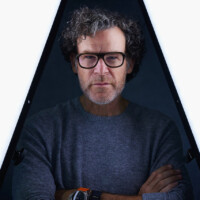
The Single Easiest Tip for Looking Confident in Photos – The Squinch™
When someone says “I’m not photogenic,” what they really mean is they don’t look confident in photos. The single most effective thing you can do to look confident on camera, what I call lookability, is to squinch.
The Squinch is a small adjustment to your eyes. You raise your lower eyelid slightly while keeping the upper eyelid steady. That’s it. It takes about three seconds to learn, and it solves the most common problem in portraits: the wide-eyed, deer-in-the-headlights look that makes you appear nervous, surprised, or unsure of yourself.
Why your eyes go wide on camera
When a person feels uncertain, their eyes open wider. It’s automatic. It happens before they think about it. The camera catches it instantly, and in a still image those wide eyes read as anxious or distracted no matter how composed the rest of the face is.
Wiktionary defines the “deer in the headlights” look as: “A person in a mental state of high arousal caused by anxiety, fear, panic, surprise and/or confusion.” That’s exactly what most people produce when a lens points at them.

I noticed the problem years ago while photographing actors. My imagery is intentionally clean and stripped down, with nothing in the frame to distract you from the person’s face. So 100% of the viewer’s attention lands on the expression, and if the eyes were wide, the photo was dead before I clicked the shutter.
If you’ve ever looked at a picture of yourself and thought “that doesn’t look like me,” there’s a good chance the eyes were giving you away.
What the Squinch actually is
Squinch (verb): to narrow the distance between your lower eyelid and your pupil.
The Squinch is not the same as squinting. Squinting is what you do in bright sun, where both eyelids close partway to protect your eyes from too much light. It looks tense, and it reads as effort.
The Squinch only uses the lower eyelid. You raise it just enough to bring it slightly closer to your pupil. The upper eyelid barely moves. Anatomically, you’re narrowing the palpebral fissure (the space between your upper and lower lid) predominantly from the bottom rather than evenly from both sides.
The result is a focused, calm, confident look. Not a strained one. Not a scowl. Something closer to the expression you make when you’re genuinely engaged in a conversation and locked in on what the other person is saying.

Why “squint” wasn’t the answer
For years I told everyone in front of my camera to squint. The pictures got better. My headshot business in New York grew. I had built a real practice around what was, at the time, just one word of direction.
But there was a problem, and it took me years to put my finger on it.
Squinting is a survival mechanism. Your upper eyelids close partway like a sun visor when there’s too much light to process. It’s defensive. It’s the face you make when you’re protecting yourself from something. That isn’t the face you want in your professional headshot.
What I actually wanted was the lower-eyelid movement without the upper-eyelid clamping down. I needed a different word for it. The Squinch is what I landed on.
Once I started directing people to squinch instead of squint, the photos changed. The tension came out. The focus stayed. The look I had been chasing for years was suddenly repeatable on every subject who walked into the studio.
How to practice the Squinch
Stand in front of a mirror. Look yourself in the eye. Pull your lower eyelids up toward your pupils, just slightly. Watch what happens to your expression in the mirror.
The first few times it will feel awkward. You’re consciously controlling a small muscle group you’ve never thought about. After a day or two of practice it becomes automatic. Once you have it, you can deploy it any time a camera is pointed at you, from a corporate headshot session to a phone snap at a wedding.
A few things to watch for as you learn it:
- Don’t overdo it. A subtle squinch reads as confidence. An aggressive squinch reads as a glare.
- Don’t drop your upper eyelid. If the top lid comes down to meet the bottom one, you’re back to squinting. Keep the upper eyelid where it naturally rests.
- Pair it with the right expression. The Squinch works best with a face that sits between neutral and a small smile. Find that expression first, hold it, then squinch.
- Practice in conversation. The most natural-looking squinch happens when you’re slightly engaged with something, not when you’re posing. Try talking to yourself in the mirror while you do it.

When to use it
The Squinch is most useful for the kind of photos where you want to project calm confidence on demand:
- A professional headshot
- A LinkedIn photo or other career-related image
- Press or media coverage
- A dating profile photo, where confidence reads strongly
- A group photo where you want to look engaged rather than awkward
- Any photo where the expression matters more than the moment
The Squinch is not for every shot. Casual photos with friends, candids of laughter or surprise, action shots where the expression is meant to be unfiltered won’t benefit from the technique. The Squinch is for controlled portraits where you want to look like the most composed version of yourself on demand.
Where the Squinch came from
I released “It’s All About the Squinch” on YouTube in November 2013. The video hit half a million views in less than a week. It was featured on ABC News. The term was even written into an episode of Orange is the New Black on Netflix.
Since then I’ve been coaching every subject who steps in front of my lens to squinch, and I’ve trained thousands of photographers through Headshot Crew to do the same with theirs. Now this look shows up in headshots from sessions I never touched, on sites and LinkedIn profiles around the world.
The Squinch is one of a handful of techniques
The Squinch is the easiest place to start, but it’s not the only thing. The jawline, the smile, the angle of the head, the way the subject sits or stands. Each one plays a role in how a person reads on camera. Together they make up a system that has worked on thousands of subjects in my studio over the past two decades. If you are a photographer want want to